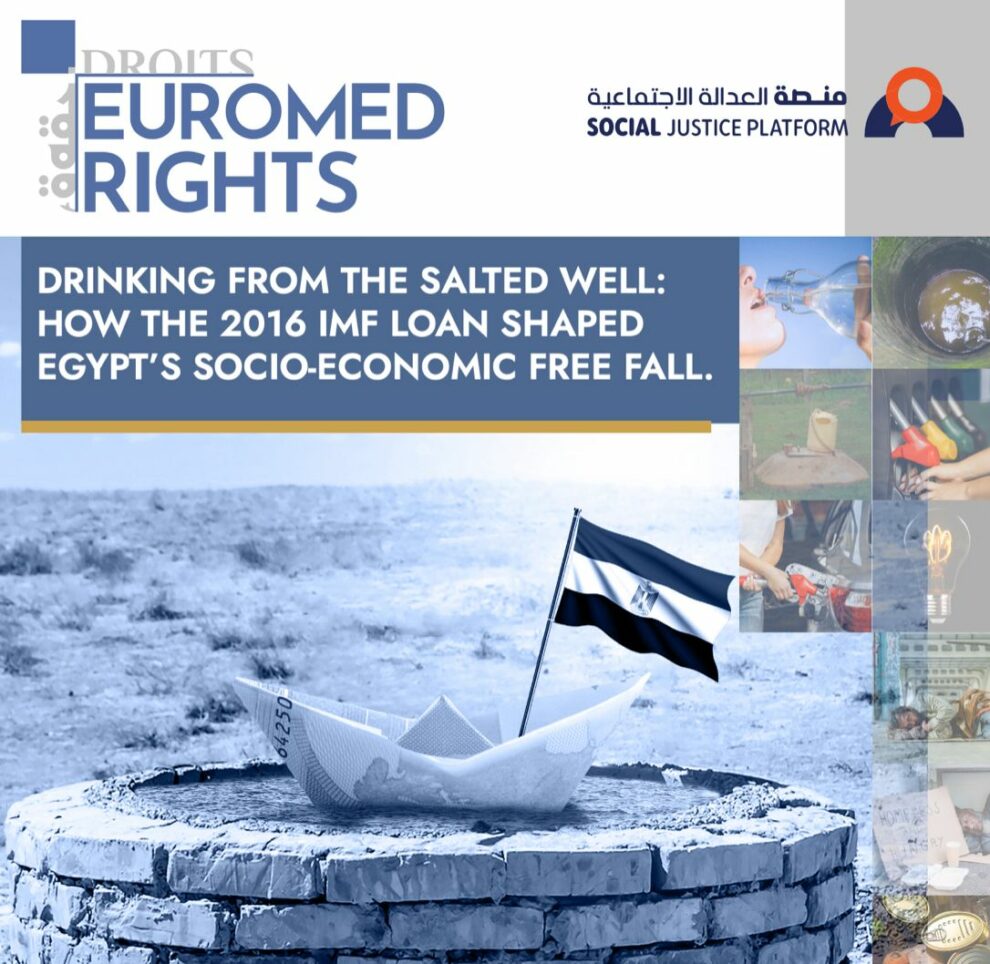
The International Monetary Fund (IMF) faces mounting criticism for human rights-void policies, as a new report buy EuroMed Rights and SJP showcases the cascade of detrimental consequences of Egypt’s IMF loan 2016.
In the intervening years, Egypt has experienced a distressing negative spiral marked by deteriorating GDP rates, plummeting wages, an escalating poverty rate, piling foreign debt, and the imposition of unprecedented austerity measures.
Within the span of just one year, inflation soared by a staggering 18 percentage points, while the poverty rate increased with five percentage points. Regrettably, the IMF failed its promises to reduce the balance of payments gap, the poverty rate, or the total deficit as the intended bolstered Foreign Direct Investments (FDIs) and strengthened private sector performance failed to materialise. Consequently, in December 2022, Egypt found itself compelled to enter into a new IMF loan agreement, this time to the tune of 3 billion USD, laden with equally problematic conditionalities.
The recent IMF loan agreements with Egypt serve as a stark illustration of the inherent shortcomings within an institution that operates without democratic oversight, accountability, or transparency, and without a human rights aligned mandate. Both states and international financial institutions must live up to international human rights obligations when designing economic reform and must be held accountable for policies that violate human rights, including economic and social rights.
The international community is called upon to collaborate in crafting sustainable solutions for countries mired in debt distress. In short, all options for debt relief, including debt cancellation, should be thoroughly explored. In the long run, the establishment of a democratic sovereign debt authority, grounded in human rights principles, is imperative.
Finally, the IMF must undergo fundamental change, as part of a wider global reform that includes the financial and monetary system, tax, trade, environmental stability and climate action, and other development issues, anchored in respect for human rights and a measurement of wellbeing that is not reduced to GDP.
Read the report: